In Support of Adam Goodes

Adam Goodes
Adam Goodes

The racially charged booing and denigration of Sydney Swans’ star player, Adam Goodes, has reached a crescendo in recent weeks. His detractors include supporters of rival AFL clubs as well as some conservative commentators such as radio shock jock Alan Jones, journalist Miranda Devine and TV host and journalist Andrew Bolt.

On Channel Seven’s Sunrise program, Jones was reported as saying that opposition club supporters were reacting negatively to Goodes because they simply did not like his behaviour, including his “spear throwing and the running in and doing a war dance and so on and provoking people”. Continue reading In Support of Adam Goodes

“Whose side are you on?”

E D Morel (Wikimedia Commons)

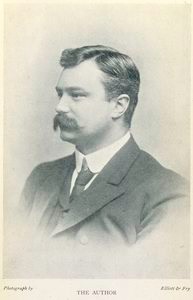
A timely response to Prime Minister Abbott’s infamous challenge “Whose side are you on?” has recently been written by Douglas Newton, historian and author of Hellbent: Australia’s Leap Into The Great War.

Newton argues that casting doubt on the patriotism of people who eschew a “hate-the-enemy auction” has a long and dishonourable history.

Newton refers to debates in Britain over the Boer War (1899-1902) – “that vultures’ frenzy provoked by gold and diamonds” – where those who questioned the war were roundly smeared and accused of treachery. Continue reading “Whose side are you on?”

Lest We Forget – Recognising the Frontier Wars

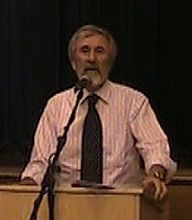
Henry Reynolds Forgotten WarThe NSW Fabians held a public forum on the Frontier Wars on Friday June 26 in Sydney. The key speaker was the historian Prof Henry Reynolds, author of Frontier War (NewSouth Publishing, 2013) and A History of Tasmania (CUP, 2012).

In promoting the event, the NSW Fabians noted that the Australian Frontier Wars were fought from 1788 to the 1920s between Indigenous Australians and an invading coalition of white settlers, militia, police, and colonial soldiers and that the conflict claimed an estimated 20,000 to 30,000 Aboriginal lives and the lives of between 2,000 and 2,500 Europeans.

Despite the significance of the Frontier Wars to our shared history, the Australian War Memorial in Canberra continues to reject calls for these wars to be granted the recognition that other wars involving Australians have been officially given. Continue reading Lest We Forget – Recognising the Frontier Wars

Report on Reconciliation Walk

20150530 Rec Walk Jenny Newman
Jennifer Newman

The Gallipoli Centenary Peace Campaign (GCPC) in conjunction with the Cooks River Valley Association (CRVA) held a Reconciliation Walk in Marrickville on Saturday 30 May.

The event was organise to (a) mark the anniversary of the High Court’s Mabo decision on 3 June in 1992 recognising native title (b) call for the Frontier Wars and their deleterious impact on Aboriginal peoples to be officially recognised (c) acknowledge the 1,000 plus Aboriginal soldiers who fought in WW1 and who faced ongoing discrimination, and worse, on their return home and (d) welcome Marrickville Council’s recent co-naming of Richardson’s Lookout as Marrickville Peace Park. Continue reading Report on Reconciliation Walk

Join the Reconciliation Walk in Marrickville – Sat 30 May

Pemulwuy_2
Resistance leader Pemulwuy and son Tedbury

National Reconciliation Week (NRW) is celebrated across Australia between 27 May and 3 June each year. The dates commemorate two significant milestones on the reconciliation calendar – the anniversaries of the successful 1967 referendum and the High Court Mabo decision in 1992.

NRW is dedicated to helping all Australians learn about their histories (Aboriginal and settler) as well as their cultures and achievements and to explore how each of us can join the national reconciliation effort.

In this spirit, GCPC is organising a NRW event on Saturday 30 May. The walk along the river via Aboriginal Interpretive Sites will be led by Wiradjuri woman, Jennifer Newman. Continue reading Join the Reconciliation Walk in Marrickville – Sat 30 May

Gallipoli and Anzac after 100 Years

Anzac Forum Douglas Newton 22Apr2015
Douglas Newton

The Gallipoli Centenary Peace Campaign hosted a public forum on 22 April called ‘Gallipoli and Anzac after 100 Years: Lessons and the Prospects for Peace Today’.

Despite the bad weather, over 80 people attended the forum at the Petersham Town Hall to hear three speakers: Douglas Newton (historian), Margot Pearson (Women’s International League for Peace and Freedom – WILPF) and Anne Noonan (Medical Association for Prevention of War – MAPW). Continue reading Gallipoli and Anzac after 100 Years

#Brandzacday

prof-bruce-scates
Prof. Bruce Scates

The ABC’s RN Sunday Extra program, broadcast on 19 April 2015, contains a segment entitled ‘#Brandzacday’ that examines the way Australians are commemorating Anzac Day and the Gallipoli Centenary.

Key issues discussed included (a) the commercialisation of Anzac Day and (b) how the Anzac legend clouds an understanding of the realities of war and Australia’s response to the great imperial rivalries underpinning the ‘war to end all wars’.

A third key issue discussed, and one at odds with (a) and (b) above, is the digitisation of repatriation records which offers a profoundly anti-war narrative that reveals the extraordinary human costs and suffering of the conflict. Continue reading #Brandzacday

Marrickville Heritage Society – Cooks River Tour

20150321-MHS-event-Nardi-Lucy-sonOn 21 March the Marrickville Heritage Society (MHS) organised a tour of the Cooks River called ‘Walk the Talk’. The main purpose of the tour was to inform MHS’ members and friends about the significance of the Cooks River to Aboriginal people past and present, as well as to learn more about the Gallipoli Centenary Peace Campaign’s proposal to have Richardson’s Lookout declared a Peace and Reconciliation Park.

The ‘Walk the Talk’ event attracted about 30 members and friends of MHS who walked along the Cooks River from Steel Park to Richardson’s Lookout via Warren Park. Continue reading Marrickville Heritage Society – Cooks River Tour

A National Shame – Veterans and PTSD

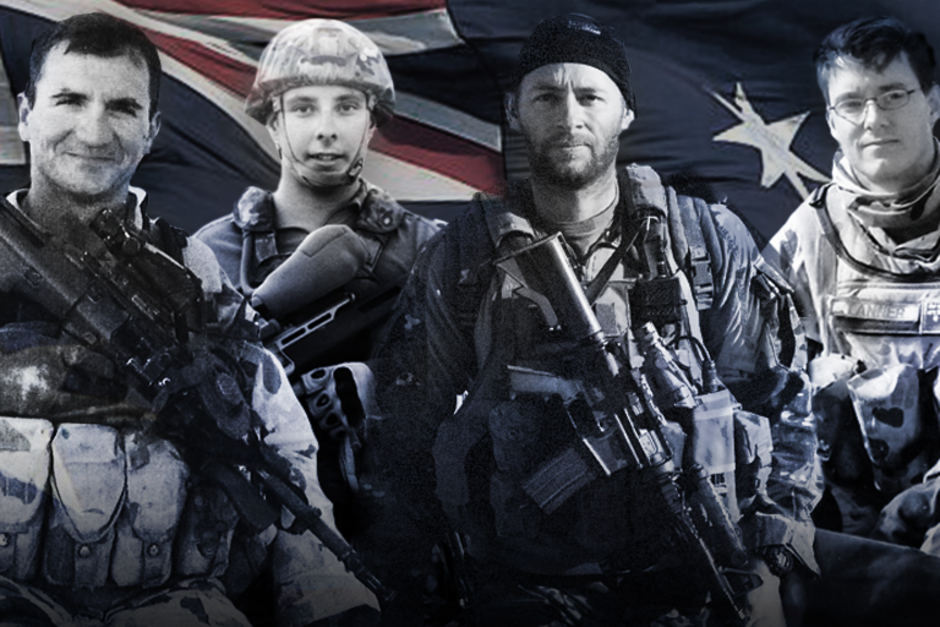
Lieutenant Geoff EvansOn 9th March, the ABC’s Four Corners program ‘Bringing the War Home’ focussed on the scourge of post-traumatic stress disorder (PTSD) amongst veterans who served in Afghanistan. During the 14 years since the invasion of Afghanistan, both Coalition and Labor leaders have been eager to wave ADF personnel off to combat in this foreign land. But these veterans’ homecoming has been a different story, an agonising one for many of them. Continue reading A National Shame – Veterans and PTSD

The 2015 Manning Clark Lecture


Is it possible to plan 100 years into the future? What are enlargers and punishers and what influence have they had on Australia’s past, present and possible futures? Richard Denniss delivers the 2015 Manning Clark lecture and asks what can economists learn from one of Australia’s most influential historians.

Access the lecture here.