China will be holding a major military parade in Beijing to commemorate the 70th anniversary of the end of WW2 on September 3, one day after the anniversary of Japan’s official surrender on September 2, 1945.
Noteworthy is the fact that the Japanese Prime Minister Shinz? Abe won’t be going, neither will US President Barak Obama, nor British Prime Minister David Cameron or any major western leader. Australia will be represented by Senator Michael Ronaldson, the Minister for Veterans Affairs.
China’s contributions and sacrifice to the Allied war effort during WW2 have been all but forgotten by Western powers. The Australian commercial media has shown little interest in reflecting on the huge loss of life and dislocation suffered by the Chinese at the hands of the Japanese. This is partly attributable to the Cold War and Western hostilities towards China following the establishment of the People’s Republic of China in 1949.
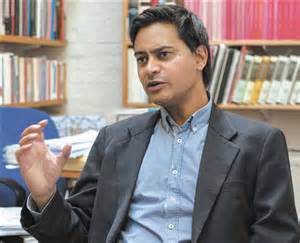
One scholar who has sought to break down this silence is Rana Mitter, Director of the University of Oxford’s China Centre. In his book Forgotten Ally: China’s World War II, 1937-1945, Mitter recounts China’s wartime predicament and examines why China’s role as an Allied power has been given short shrift in the Western world.
The historic significance of China’s resistance to the Japanese invasion and occupation, from both nationalist and communist forces, is noted by Mitter:
“China did not have the resources or military strength to provide the kinds of contributions that the USSR, the US or the British Empire did. But if China had made a different decision in 1938, and surrendered, then China’s fate would have been very different. Japan would have treated China as a colony. It would have had dominance over politics and trade on the mainland of East Asia for decades to come. Japanese forces would also have been freed for an all-out assault on the USSR, Southeast Asia, or even British India. World War II might never have happened at all in the way that we know it today. These things are still not fully appreciated in the West.”1
In relation to Japan’s revisionist account of its militaristic past, currently being promoted by Prime Minister Shinz? Abe and the Liberal Democratic Party (LDP), Mitter offers the following observation:
“It is true that some conservative figures in Japan are trying to downplay the country’s wartime crimes, including massacres in China* and the “comfort women” scandal. While it is understandable to condemn the revisionists who do try and downplay the war in Japan, it is also important to understand that there are many Japanese who do not share this viewpoint. Some Japanese journalists and academics have been at the forefront of examining their own country’s history, and many professors and teachers have done a great job producing excellent research that has forced the Japanese public to understand the war crimes committed by their soldiers.”2
For more information on the legacy of the Sino-Japanese War 1937-1945, hear Rana Mitter’s recent interview on ABC Radio RN Saturday Extra here.
Rana Mitter’s essay ‘The unquiet past’ on why seven decades on from the defeat of Japan, memories of war still divide East Asia, can be read here.
Notes
1 & 2 Jiang Hong, Interview with Rana Mitter, Chinese Social Sciences Today, July 29, 2015.
* Between December 1937 and March 1938 the Imperial Japanese Army forces brutally murdered hundreds of thousands of people – including both soldiers and civilians – in the Chinese city of Nanking (or Nanjing). Described as one of the worst massacres in the modern era, historians and charity organisations in the city at the time estimated that over 20,000 women were sexually assaulted and between 250,000 and 300,000 people killed, many of them women and children. Former Japanese Justice Minister Shigeto Nagano denied that the massacre had occurred, claiming it was a Chinese fabrication. The BBC’s report on the Nanking Massacre can be read here.